
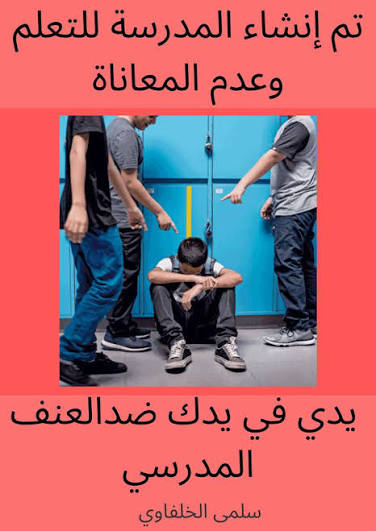
School bullying as a mode of presentation of psychiatric disorders in children and adolescents
DOI:
https://doi.org/10.65549/wjpcev89Keywords:
school bullying; child; adolescent; child and adolescent psychiatry; mental healthAbstract
ABSTRACTObjective. To describe the circumstances in which school bullying is identified and the associated psychiatric disorders in children and adolescents attending the child and adolescent psychiatry clinic at Ibn Nafis Hospital (Mohammed VI University Hospital, Marrakesh), as well as the characteristics and context of the bullying, its academic impact, its timing relative to the onset of the disorders, vulnerability and protective factors, management, and the school’s response.
Materials and methods. A single-centre descriptive study of 54 children and adolescents aged 8 to 16 years with a history of school bullying who attended the child and adolescent psychiatry clinic. Records were entered between 7 June and 17 October 2026 using a standardised data collection form and analysed descriptively. Suicide risk was assessed with the C-SSRS.
Results. The mean age was 11.9 ± 1.9 years and boys accounted for 66.7 per cent of the sample. The bullying was verbal in 94 per cent of patients, daily in 83 per cent, ongoing for more than 12 months in 61 per cent and occurred on school premises in 93 per cent of cases. Intrafamilial violence was associated in 41 per cent. Bullying was identified as a causal factor at the first consultation in only 37 per cent of patients, the main reasons for consultation being school difficulties (46 per cent) and anxiety syndrome (26 per cent). A psychiatric diagnosis was made in 81 per cent of patients (anxiety disorder 31 per cent, depressive disorder 24 per cent, intellectual disability 20 per cent). Bullying preceded the disorder in 70 per cent of patients with a depressive disorder and 60 per cent of those with an anxiety disorder and had been present since school entry in all patients with intellectual disability. No active suicidal ideation was reported. The school’s response was non-existent in 76 per cent of cases.
Conclusion. In this hospital-based clinical population, school bullying appears to be verbal, daily, long-lasting and almost exclusively school-based, often associated with intrafamilial violence and an accumulation of stressful life events. It is identified as a causal factor at the first consultation in only a minority of cases, most often behind school difficulties or anxiety syndrome. Systematic screening for bullying at every first child psychiatry consultation, joint assessment of the family context and suicide risk, and structured liaison with schools are warranted
Downloads
References
1. Olweus D. Bullying at school: basic facts and effects of a school based intervention program. J Child Psychol Psychiatry. 1994;35(7):1171-90. doi:10.1111/j.1469-7610.1994.tb01229.x.
2. Hosozawa M, et al. Bullying victimisation in adolescence: prevalence and inequalities by gender, socioeconomic status and academic performance across 71 countries. EClinicalMedicine. 2021;41:101142. doi:10.1016/j.eclinm.2021.101142.
3. Arseneault L. Annual Research Review: The persistent and pervasive impact of being bullied in childhood and adolescence: implications for policy and practice. J Child Psychol Psychiatry. 2018;59(4):405-21. doi:10.1111/jcpp.12841.
4. Moore SE, et al. Consequences of bullying victimization in childhood and adolescence: a systematic review and meta-analysis. World J Psychiatry. 2017;7(1):60-76. doi:10.5498/wjp.v7.i1.60.
5. Giuliani A, Petruccelli I, D’Urso G. Longitudinal evidence on peer victimisation and persistent mental health outcomes in youth: a systematic review. Behav Sci. 2025;15(12):1734. doi:10.3390/bs15121734.
6. Jadambaa A, Thomas HJ, Scott JG, Graves N, Brain D, Pacella R. The contribution of bullying victimisation to the burden of anxiety and depressive disorders in Australia. Epidemiol Psychiatr Sci. 2020;29:e54. doi:10.1017/S2045796019000489.
7. Roques M, et al. The experience of bullying among adolescents receiving mental health care: an interpretative phenomenological analysis. Child Adolesc Psychiatry Ment Health. 2022;16:69. doi:10.1186/s13034-022-00505-7.
8. Samara M, et al. How can bullying victimisation lead to lower academic achievement? A systematic review and meta-analysis of the mediating role of cognitive-motivational factors. Int J Environ Res Public Health. 2021;18(5):2209. doi:10.3390/ijerph18052209.
9. Wilson E, et al. The longitudinal course of childhood bullying victimization and associations with self-injurious thoughts and behaviors in children and young people: a systematic review of the literature. J Adolesc. 2023;95(1):5-33. doi:10.1002/jad.12097.
10. van Geel M, Vedder P, Tanilon J. Relationship between peer victimization, cyberbullying, and suicide in children and adolescents: a meta-analysis. JAMA Pediatr. 2014;168(5):435-42. doi:10.1001/jamapediatrics.2013.4143.
11. Christina S, et al. The bidirectional relationships between peer victimization and internalizing problems in school-aged children: an updated systematic review and meta-analysis. Clin Psychol Rev. 2021;85:101979. doi:10.1016/j.cpr.2021.101979.
12. Kranhold AL, et al. Not all wounds are visible: peer bullying and psychopathology in child and adolescent psychotherapy outpatients. Child Adolesc Psychiatry Ment Health. 2026;20:101. doi:10.1186/s13034-026-01146-w.
13. Blomqvist K, Saarento-Zaprudin S, Salmivalli C. Telling adults about one’s plight as a victim of bullying: student- and context-related factors predicting disclosure. Scand J Psychol. 2020;61(1):151-9. doi:10.1111/sjop.12521.
14. Abregú-Crespo R, et al. School bullying in children and adolescents with neurodevelopmental and psychiatric conditions: a systematic review and meta-analysis. Lancet Child Adolesc Health. 2024;8(2):122-34. doi:10.1016/S2352-4642(23)00289-4.
15. Organisation mondiale de la Santé. Global School-based Student Health Survey (GSHS), Morocco (Fez): 2023 Fact Sheet. 2023. https://extranet.who.int/ncdsmicrodata/index.php/catalog/982/dow nload/7020 [consulté le 08/11/2026].
16. Conseil supérieur de l’éducation, de la formation et de la recherche scientifique (CSEFRS). La violence en milieu scolaire. Rapport thématique – Résumé. 2022. https://www.csefrs.ma/wp-content/uploads/2023/08/Resume-Rapport-Violence-en-milieu-scolaire-FR.pdf [consulté le 04/11/2026].
17. Hensums M, et al. What works for whom in school-based anti-bullying interventions? An individual participant data meta-analysis. Prev Sci. 2023;24(8):1435-46. doi:10.1007/s11121-022-01387-z.
18. Evans-Lacko S, et al. Childhood bullying victimization is associated with use of mental health services over five decades: a longitudinal nationally representative cohort study. Psychol Med. 2017;47(1):127-35. doi:10.1017/S0033291716001719.
19. Martín-Babarro J, et al. Association of different forms of child maltreatment with peer victimization in Mexican children and adolescents. Front Psychol. 2021;12:662121. doi:10.3389/fpsyg.2021.662121.
20. Sharpe H, Fink E, Duffy F, Patalay P. Changes in peer and sibling victimization in early adolescence: longitudinal associations with multiple indices of mental health in a prospective birth cohort study. Eur Child Adolesc Psychiatry. 2022;31(5):737-46. doi:10.1007/s00787-020-01708-z.
21. Hansen HH, et al. Bullying behaviour among Norwegian adolescents: psychiatric diagnoses and school well-being in a clinical sample. Nord J Psychiatry. 2014;68(5):355-61. doi:10.3109/08039488.2013.845689.
22. Idsoe T, et al. Bullying victimization and trauma. Front Psychiatry. 2021;11:480353. doi:10.3389/fpsyt.2020.480353.
23. Sachser C, et al. Understanding bullying as a significant predictor of posttraumatic stress symptoms in adolescents: insights from clinical samples in Norway, The Netherlands and Germany. Eur J Psychotraumatol. 2025;16(1):2589566. doi:10.1080/20008066.2025.2589566.
24. Nicola E, Mastroyannopoulou K, Reeves H, Pass L. Longitudinal associations between peer victimisation subtypes and children and adolescents’ anxiety: a meta-analysis. Aggress Violent Behav. 2024;79:102013. doi:10.1016/j.avb.2024.102013.
25. Maïano C, Aimé A, Salvas MC, Morin AJS, Normand CL. Prevalence and correlates of bullying perpetration and victimization among school-aged youth with intellectual disabilities: a systematic review. Res Dev Disabil. 2016;49-50:181-95. doi:10.1016/j.ridd.2015.11.015.
26. Gaffney H, Ttofi MM, Farrington DP. Evaluating the effectiveness of school-bullying prevention programs: an updated meta-analytical review. Aggress Violent Behav. 2019;45:111-33. doi:10.1016/j.avb.2018.07.001.
Downloads
Published
Issue
Section
License
Copyright (c) 2026 Journal of Child and Adolescent Psychiatry and Psychology

This work is licensed under a Creative Commons Attribution-NonCommercial-ShareAlike 4.0 International License.
Esta obra está bajo una licencia internacional Creative Commons Atribución-NoComercial-CompartirIgual 4.0.
